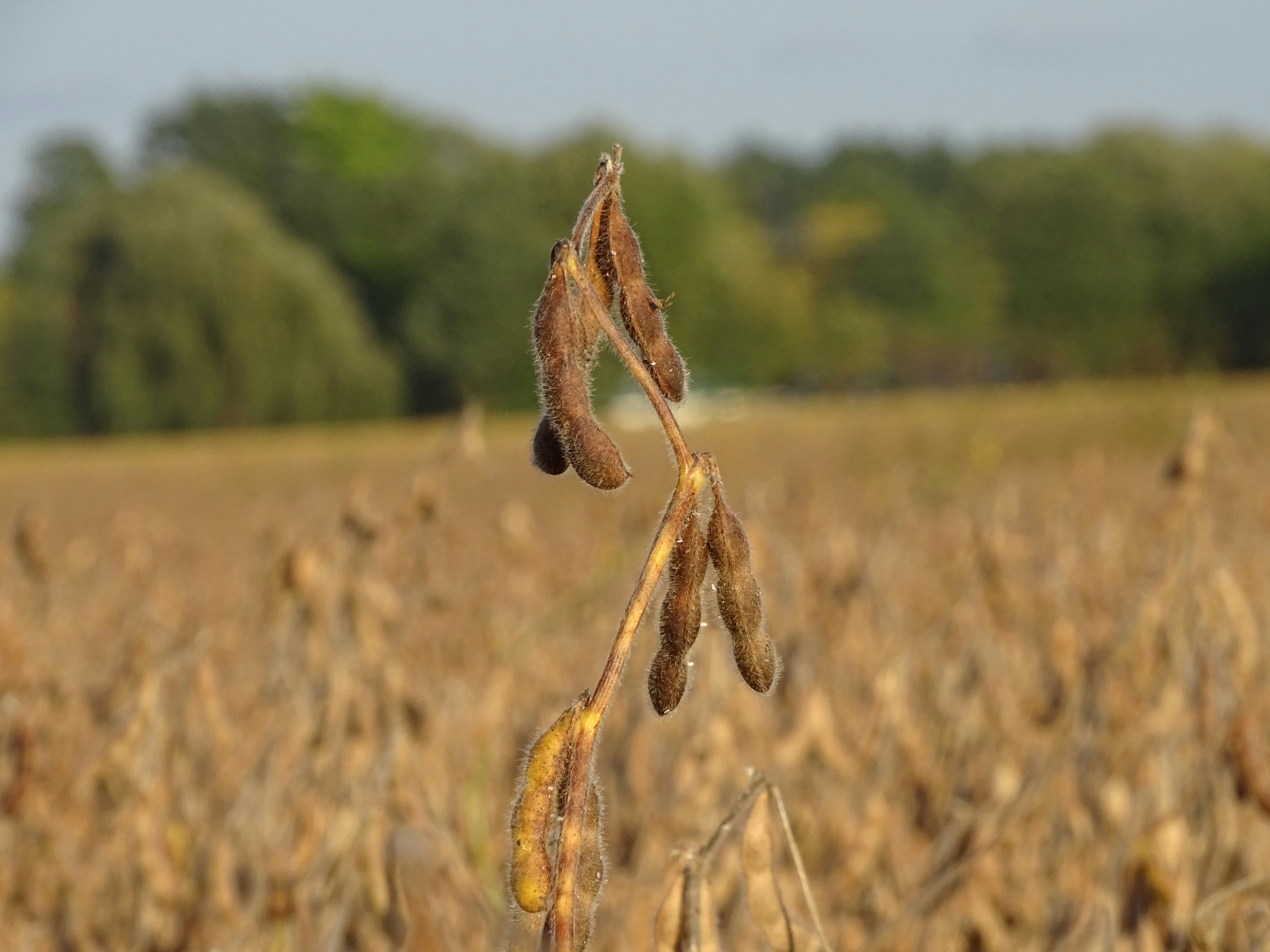
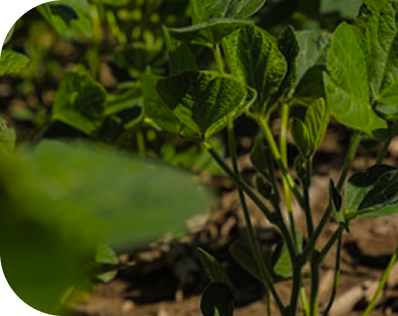
See what Prairie Power could do on your soybeans —
Grow EstimatorSee what Prairie Power could do on your soybeans —
Grow EstimatorAgriculture Waste Management 101:
Everything You Need to Know

Earnest Agriculture
March 3, 2025



What Is Agricultural Waste?
Agricultural waste is any material generated by farming operations that is not the primary crop or livestock product being produced. It includes crop residue left in fields after harvest animal manure from livestock operations agricultural wastewater from irrigation and processing chemical containers and packaging from pesticide and fertilizer programs and food processing byproducts from on-farm handling and storage operations.
The scale of agricultural waste generation is significant. U.S. livestock operations alone produce an estimated 500 million tons of manure annually — more than three times the volume of municipal solid waste generated by the entire U.S. population. Crop residue from corn and soybean production covers hundreds of millions of acres each fall. Managing these materials effectively is one of the most consequential decisions a farm operation makes — both for its own long-term productivity and for the health of the surrounding environment.
The distinction that matters most in waste management is between waste that is returned to productive use and waste that becomes a liability. Agricultural waste is not inherently a problem. It is a resource that farming systems have managed as a liability — and the shift toward sustainable farming practices is, in large part, a shift toward recognizing and capturing its value.
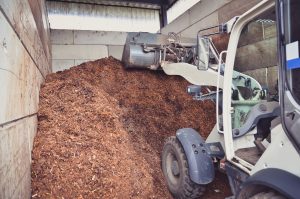
Crop residue — the stalks leaves husks and roots left in the field after harvest — is the largest category of agricultural waste by volume. Corn stover soybean stubble wheat straw and other residues represent significant quantities of organic carbon nitrogen phosphorus and potassium that have been incorporated into plant biomass over the growing season.
How that residue is managed has direct consequences for soil health. Residue left on the surface protects the soil from erosion moderates soil temperature and moisture and feeds the decomposer community that drives nutrient cycling. Residue incorporated through tillage accelerates decomposition but disrupts soil structure and releases carbon that took the season to accumulate. Residue removed entirely — for biomass energy or bedding — depletes the organic matter input that builds humus soil over time.
The sustainable farming practice standard for residue management is to return as much organic material to the soil as crop removal and field operations allow — maintaining the organic matter inputs that sustain biological activity and long-term soil productivity.
Manure from cattle hogs poultry and other livestock is simultaneously the most nutrient-rich agricultural waste stream and the most environmentally consequential if mismanaged. It contains nitrogen phosphorus potassium and a full complement of micronutrients — the same elements that synthetic fertilizer programs supply at significant cost. Applied at agronomic rates matched to crop removal manure is one of the highest-value fertility inputs available to integrated crop-livestock operations.
Mismanaged manure — over-applied at rates that exceed crop uptake capacity applied to frozen or saturated ground or stored in systems that allow runoff — is a primary source of nutrient pollution in waterways. Nitrate contamination of groundwater and phosphorus loading of surface water are documented problems in intensive livestock production regions that trace directly to manure management failures.
The management gap between liability and asset is largely a matter of timing rate and method. Manure applied at the right rate at the right time with appropriate incorporation or injection delivers fertility builds humus soil and reduces synthetic fertilizer costs. The same material applied carelessly creates environmental and regulatory problems that cost more to remediate than the fertility value it provided.
Agricultural wastewater includes irrigation runoff drainage tile water and processing water from on-farm washing sorting and packing operations. It can carry nutrients sediment pesticide residues and pathogens depending on the source and management of the farming operation generating it.
Tile drainage systems that manage waterlogged soils in humid production regions are a primary pathway for nitrate loss from agricultural fields into waterways. Constructed wetlands riparian buffers and cover crops are the most effective management tools for intercepting agricultural wastewater and removing nutrients before they reach surface water — converting a waste stream into a water quality benefit.
Pesticide and fertilizer containers represent a chemical waste stream that requires specific handling under federal and state regulations. Triple-rinsed pesticide containers can be recycled through agricultural container recycling programs. Fertilizer bags and bulk containers require proper disposal to prevent chemical contamination of soil and water. Most states have agricultural container recycling programs that provide low-cost or no-cost disposal options for properly managed containers.
On-farm food processing — washing grading packing and storage — generates organic waste streams including culled produce processing water and packaging materials. These streams are most productively managed through composting feeding to livestock or anaerobic digestion that captures biogas energy from the organic material rather than landfilling.

Composting is the controlled aerobic decomposition of organic waste — crop residue manure food processing byproducts and other biological materials — into a stable humus-rich amendment that improves soil health and provides slow-release fertility. Well-managed compost reduces pathogen risk in raw manure reduces weed seed viability builds humus soil and feeds the soil microbial community that drives nutrient cycling across the growing season.
The biological activity in finished compost is dense with the bacteria fungi and other decomposers that form the base of the soil food web. Applied consistently over multiple seasons compost raises organic matter percentage improves water-holding capacity and creates the aggregate stability that defines productive topsoil. Fields with strong compost history consistently outperform adjacent fields without it at equivalent synthetic input levels.
Vermicomposting uses earthworms — typically red wigglers — to process organic waste into worm castings: one of the most biologically active soil amendments available. Worm castings are rich in plant-available nitrogen phosphorus potassium and micronutrients and dense with beneficial bacteria and fungi that seed the soil microbiome around roots transplants and seed zones.
As an agricultural waste management tool vermicomposting converts food processing waste manure and crop residue into worm castings fertilizer that improves germination establishment and early-season plant health. The process is most practical at small to medium scale for high-value crop production. At broad-acre field scale the equivalent outcome is achieved by building earthworm populations in-field through reduced tillage cover crops and organic matter additions — creating continuous worm castings production throughout the soil profile rather than as a separate process.
Anaerobic digestion is the microbial decomposition of organic waste in the absence of oxygen — producing biogas (methane and carbon dioxide) that can be captured for heat or electricity generation and digestate that can be applied to fields as a nutrient-rich soil amendment. Large livestock operations are the primary users of anaerobic digesters in U.S. agriculture because of the volume and consistency of the manure stream they generate.
Anaerobic digestion converts a waste management liability into an energy asset while reducing odor greenhouse gas emissions and pathogen risk compared to unmanaged manure storage. The digestate retains most of the nutrient value of the original manure in a more stable and consistent form — improving application precision and reducing the over-application risk that causes nutrient runoff from raw manure programs.
Cover crops planted after cash crop harvest intercept residual nutrients that would otherwise leach over winter convert them into plant biomass and return them to the soil as organic matter the following season. They are simultaneously a waste management tool — capturing the nutrient waste stream from cash crop production — and a soil health investment that builds the organic matter and biological activity that defines productive humus soil.
Managing crop residue in conjunction with cover crops — maintaining surface residue for erosion protection while establishing cover crop stands that feed the soil microbiome through winter — is the most biologically productive approach to the residue management question. It requires attention to residue distribution at harvest and seeding method for cover crop establishment but delivers compounding soil health benefits that residue tillage or removal cannot match.
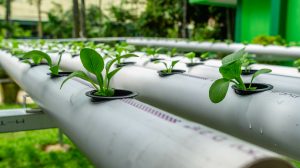
Regenerative agriculture reframes agricultural waste entirely. In a regenerative system there is no waste — only organic material cycling through biological processes at different stages of decomposition. Crop residue becomes food for decomposers. Manure becomes fertility. Wastewater becomes an irrigation and nutrient resource. The goal is a closed-loop system where outputs from one part of the operation feed inputs to another — reducing external input dependency and building the soil organic matter and biological activity that make farmland more productive over time.
The soil biology that drives this cycling — the bacteria fungi protozoa and earthworms that decompose organic matter and release nutrients — is the same biology that microbial inoculants are designed to support and enhance. A farm that manages organic waste well feeds that biology consistently. A farm that depletes organic matter through tillage removal and mismanagement starves it — increasing input dependency and reducing the return on every dollar spent on fertility.
Earnest Agriculture's Prairie Power Soybean supports the rhizosphere biology that drives soybean performance and nutrient cycling efficiency. Across 45 locations in 14 states in 2025 it delivered an average 7 percent yield lift at $10 per acre — a 3:1 return on investment (ROI) for farmers. Results vary by field; run the numbers on your acres.
Agricultural waste is not a problem to be disposed of — it is a resource to be managed. Crop residue manure and organic processing byproducts are the raw materials of humus soil the inputs that feed soil biology and the fertility reserve that reduces synthetic input dependency over time. The farms that manage these materials well build soil health and long-term productivity. The farms that manage them poorly create environmental liability and deplete the biological capital that makes their land valuable.
Sustainable farming practices that return organic matter to the soil — composting vermicomposting cover cropping and precision manure management — are the most durable investments available in long-term farm productivity. They do not require new products or new technology. They require the recognition that what leaves the field as waste can come back as the most valuable input on the farm.
Q: What is agricultural waste?
Agricultural waste is any material generated by farming operations that is not the primary crop or livestock product being produced. It includes crop residue animal manure agricultural wastewater chemical containers and food processing byproducts. Managed well these materials are a fertility and soil health resource. Managed poorly they become environmental liabilities that pollute waterways and degrade soil productivity.
Q: How does manure management affect soil health?
Manure applied at agronomic rates at the right time and method builds humus soil improves water-holding capacity and feeds the soil microbial community that drives nutrient cycling. Over-applied or mismanaged manure creates nutrient runoff groundwater contamination and salt accumulation that damages soil biology. The difference between asset and liability is timing rate and method — not the material itself.
Q: What are worm castings and how do they fit into waste management?
Worm castings are the excretions of earthworms as they process organic waste — rich in plant-available nutrients and dense with beneficial soil microbes. Vermicomposting converts agricultural organic waste into worm castings fertilizer that improves soil biology germination and plant health. At field scale the goal is building in-soil earthworm populations through reduced tillage and organic matter additions so castings are produced continuously throughout the profile.
Q: How does composting improve soil health?
Composting converts raw organic waste into stable humus-rich material that feeds the soil microbial community builds organic matter and improves aggregate stability and water-holding capacity. Applied consistently over multiple seasons compost raises soil organic matter percentage — the most direct indicator of long-term soil productivity — and reduces synthetic fertilizer requirements by improving the biological nutrient cycling that releases plant-available nutrients from organic matter.
Q: How does agricultural waste management connect to regenerative agriculture?
Regenerative agriculture treats organic waste as a resource cycling through biological processes rather than a liability to be disposed of. Crop residue manure and processing byproducts managed through composting cover crops and precision application feed the soil biology that drives nutrient cycling builds humus soil and reduces synthetic input dependency — the core outcomes that regenerative systems are designed to achieve.