See what Prairie Power could do on your soybeans —
Grow EstimatorSee what Prairie Power could do on your soybeans —
Grow EstimatorFertilizer in Agriculture: Organic vs Inorganic and
How to Use Both Correctly

Earnest Agriculture
March 3, 2025


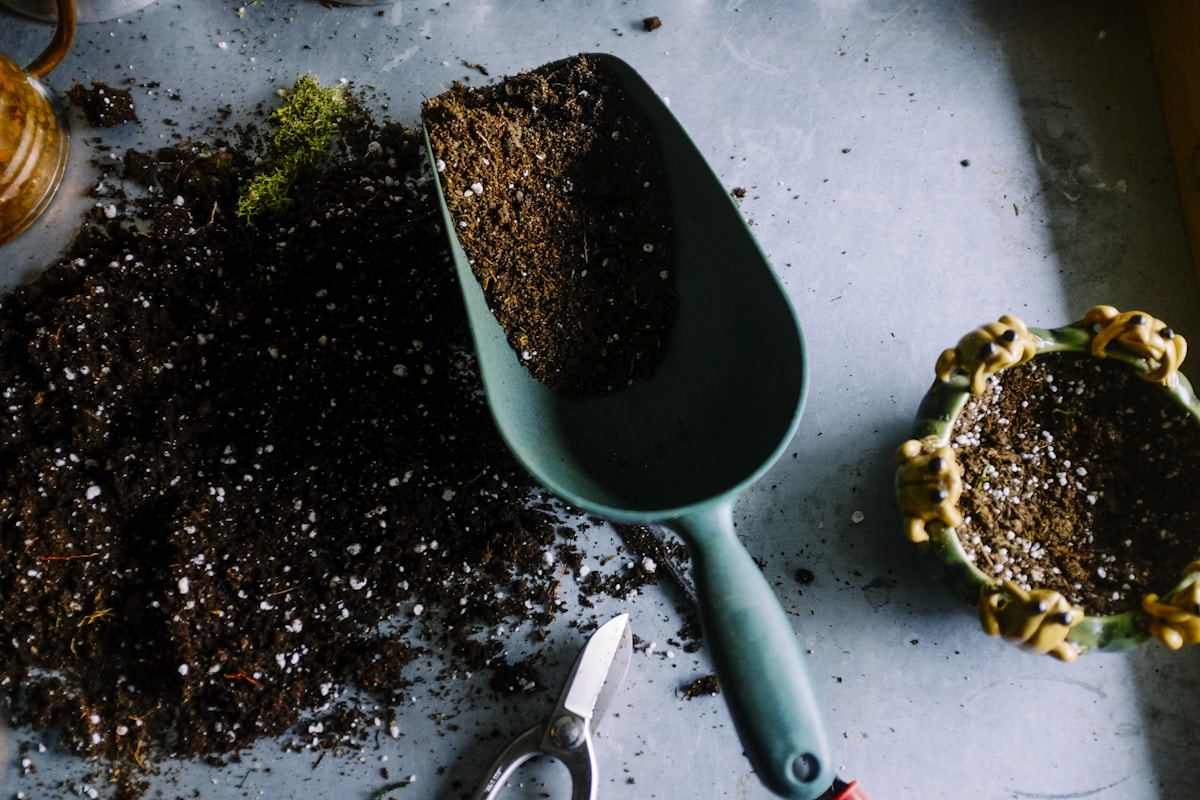
All the nutrients in our food originate from the soil. Healthy crops require healthy soil and fertilizer is one of the primary tools farmers and gardeners use to ensure that soil contains the nutrients plants need to grow produce and reach their yield potential.
Soils naturally contain a range of nutrients: nitrogen phosphorus potassium calcium magnesium sulfur and an array of micronutrients that plants need in smaller quantities. When those nutrients are present at adequate levels plants grow efficiently and produce food at or near their genetic potential. When nutrient levels fall below what a crop requires plants experience deficiency symptoms: yellowing leaves stunted growth reduced root development and ultimately lower yields that reduce the food available to feed a growing global population.
Fertilizer addresses that gap. By supplying the nutrients that soil cannot provide on its own it enables crops to reach the productivity levels that global food security depends on. Used correctly fertilizer is one of the most precise and impactful investments a farmer can make. Used incorrectly it is expensive and environmentally damaging. The difference is understanding what your soil needs and applying nutrients at the right rate at the right time.

Organic fertilizers are derived from natural sources: animal manure compost worm castings plant residues bone meal blood meal fish emulsion and seaweed. They release nutrients slowly through biological decomposition rather than delivering them in immediately soluble form. This means nutrients become available as the soil microbial community breaks them down matching release rates more closely to crop uptake windows and reducing the leaching losses that make inorganic fertilizers environmentally problematic at high rates.
The secondary benefit of organic fertilizers is what they do to the soil itself. Every ton of compost or manure applied adds organic carbon that feeds the soil food web improves aggregate stability and builds humus soil over time. Humus soil is the biologically active organic-matter-rich material that gives productive topsoil its dark color high water-holding capacity and natural fertility. It is built through the same biological processes that organic fertilizers support not through chemistry that bypasses them.
Worm castings are among the most concentrated and biologically active organic fertilizer inputs available. Rich in plant-available nitrogen phosphorus potassium and micronutrients and dense with beneficial bacteria and fungi worm castings improve plant growth germination rates and soil microbiome activity wherever they are applied. Supporting active earthworm populations in farm fields through reduced tillage and organic matter additions creates continuous worm casting production throughout the soil profile at no input cost.
Inorganic fertilizers are manufactured or mined chemical compounds that supply nitrogen phosphorus and potassium in immediately plant-available forms. The most common nitrogen fertilizers are anhydrous ammonia urea and urea-ammonium nitrate (UAN). Phosphorus is supplied as monoammonium phosphate (MAP) or diammonium phosphate (DAP). Potassium is supplied as potassium chloride (muriate of potash) or potassium sulfate.
Inorganic fertilizers are effective and fast-acting but carry environmental risks at high rates or poorly timed applications. Soluble nitrogen leaches readily through sandy soils or moves off saturated ground in runoff events before crops can absorb it. Excess phosphorus binds to eroded soil particles and enters waterways contributing to algae blooms and aquatic ecosystem disruption. The precision of application rate and timing is therefore critical to both agronomic effectiveness and environmental responsibility.
Most commercial farmers today rely on a combination of organic and inorganic inputs: building long-term soil fertility with organic matter while using inorganic sources to meet precise in-season nutrient demand that organic slow-release inputs cannot always satisfy on their own.

Soil testing is the most important step before any fertilizer application. A standard soil test sent to a certified laboratory reports pH soil organic matter content and available levels of nitrogen phosphorus potassium calcium magnesium and sulfur. Some tests also include micronutrient analysis and biological activity indicators depending on the lab and the package selected.
Soil testing tells you two things that guesswork cannot: which nutrients are actually limiting and what rate of application is needed to address the deficiency without over-applying. Over-application is one of the most common and costly mistakes in fertilizer management. Adding more than the crop can use does not increase yield but it does increase cost and environmental risk. Adding too little leaves yield potential on the table. Soil testing calibrates the application to the actual need.
Farmers typically submit soil samples to a laboratory every one to three years depending on field history and management intensity. Samples are taken from multiple points across a field to account for spatial variability in nutrient levels and organic matter. GPS-referenced soil sampling combined with variable rate application technology allows fertilizer to be applied at different rates in different zones of the same field matching inputs to actual soil capacity rather than applying a uniform rate that over-applies in some areas and under-applies in others.
The most actionable numbers in a standard soil test are pH nitrogen phosphorus and potassium. Soil pH affects nutrient availability across the board: most crops perform best between pH 6.0 and 7.0 and nutrients become less available as pH moves outside that range regardless of how much fertilizer is applied. Liming acidic soils to correct pH is often the highest-return fertility investment available before any other input is considered.
Organic matter percentage is the long-term trend indicator. Rising organic matter means the soil biology program is working. Declining organic matter means the farm is drawing down biological capital faster than it is being replaced. Tracking organic matter over multiple soil test cycles is the most direct measure of whether a fertility and soil health program is building or depleting the land.
The most cost-effective nitrogen source available to row crop farmers is not in a fertilizer tank. It is in the soil biology of a well-managed soybean field. Biological nitrogen fixation (BNF) is the process by which Bradyrhizobium japonicum bacteria living in nodules on soybean roots convert atmospheric nitrogen gas into ammonia that the plant can use. A well-nodulated soybean crop can fix 100 to 300 pounds of nitrogen per acre annually reducing the synthetic nitrogen requirement for the following corn crop significantly.
Nitrogen fixation works through a symbiotic relationship: the plant feeds the bacteria carbon and the bacteria supply the plant with fixed nitrogen. The efficiency of this process depends on the Bradyrhizobium population in the soil and the health of the root nodulation. Fields with adequate populations and good nodulation fix more nitrogen than those with depleted biology or restricted root development.
Microbial seed inoculants that deliver Bradyrhizobium directly to the seed at planting ensure adequate populations for maximum nitrogen fixation regardless of field history. Combined with cover crops that add additional biological nitrogen and reduced tillage that preserves the microbial habitat nitrogen fixation supports biological nitrogen fixation is one of the highest-return and lowest-cost tools in a sustainable fertility program.
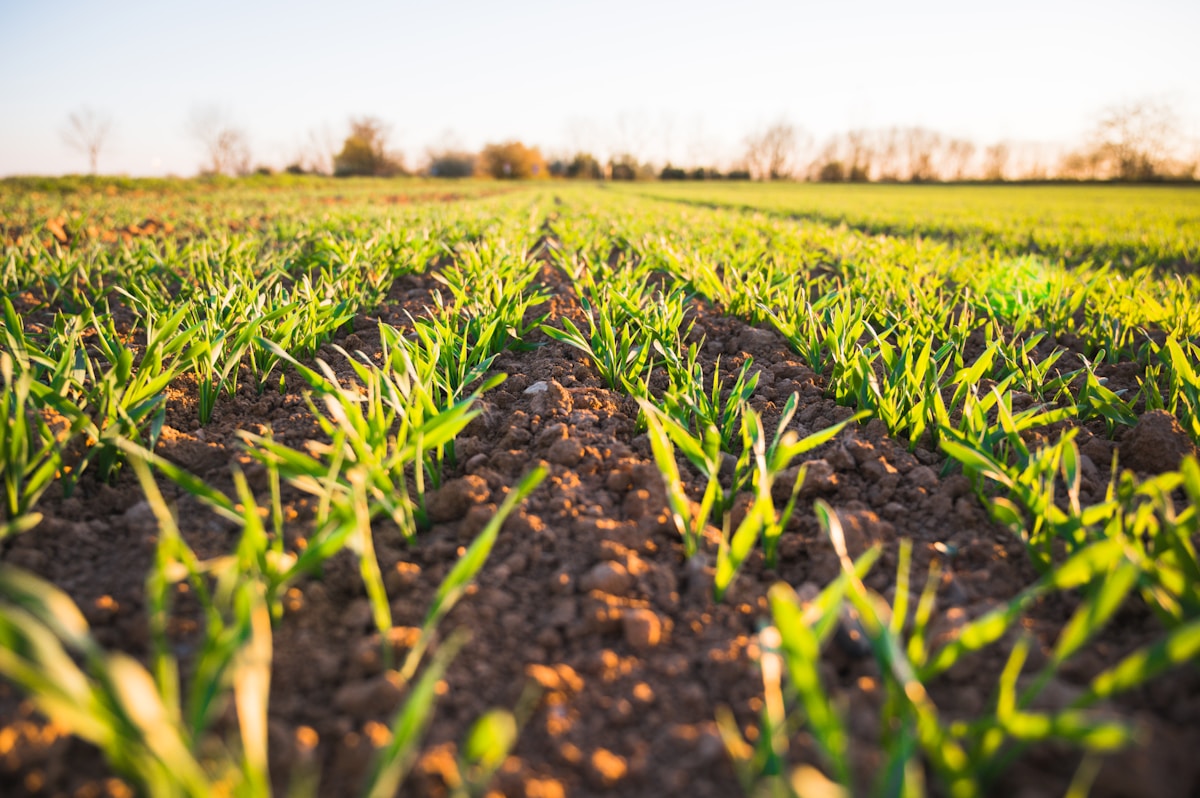
The biological community in healthy soil improves the efficiency of every fertilizer dollar spent. Phosphorus-solubilizing bacteria and mycorrhizal fungi convert soil-bound phosphorus into plant-available forms extending the effective reach of applied phosphorus inputs. Nitrogen-cycling bacteria accelerate the mineralization of organic nitrogen from soil organic matter and crop residue making it available to crops across the growing season. A biologically active soil requires less synthetic input to achieve the same yield outcome as a biologically depleted one.
Earnest Agriculture Prairie Power Soybean is an AI-designed microbial biostimulant that supports the rhizosphere biology driving soybean performance including nitrogen fixation phosphorus uptake and root development. Across 45 locations in 14 states in 2025 it delivered an average 7 percent yield lift at $10 per acre a 3:1 return on investment (ROI) for farmers. Results vary by field; run the numbers on your acres.
Fertilizer is essential to global food production and will remain so. The question is not whether to fertilize but how to fertilize precisely efficiently and in ways that build rather than deplete the soil that every crop depends on. Soil testing removes the guesswork from rate decisions. Organic inputs including worm castings compost and manure build humus soil and feed the biology that improves nutrient cycling efficiency. Biological nitrogen fixation from well-managed legumes reduces synthetic nitrogen costs. And microbial inputs that support rhizosphere biology improve the return on every fertility input applied.
Q: What is fertilizer and why is it used in agriculture?
Fertilizer is any material applied to soil or plants to supply the nutrients that support plant growth. It is used when soil nutrient levels are insufficient to meet crop demand. Organic fertilizers from natural sources like compost manure and worm castings release nutrients slowly through biological decomposition. Inorganic fertilizers supply nitrogen phosphorus and potassium in immediately available chemical form. Both are used to ensure crops reach their yield potential and contribute to global food security.
Q: What is the difference between organic and inorganic fertilizer?
Organic fertilizers are derived from natural materials including manure compost worm castings and plant residues. They release nutrients slowly through biological decomposition and build humus soil and microbial activity over time. Inorganic fertilizers are manufactured or mined chemicals that supply nutrients in immediately soluble forms. They act faster but do not improve soil biology. Most productive farms use both in combination matching the strengths of each to specific crop and soil needs.
Q: Why is soil testing important before applying fertilizer?
Soil testing identifies which nutrients are actually limiting plant growth and at what rate they need to be supplied. It prevents over-application which wastes money and risks environmental damage through leaching and runoff and under-application which leaves yield potential unrealized. A soil test every one to three years is the foundation of any precision fertility program and the most reliable way to track whether organic matter and long-term soil health are improving or declining.
Q: What is nitrogen fixation and how does it reduce fertilizer costs?
Nitrogen fixation is the biological conversion of atmospheric nitrogen gas into plant-available ammonia by soil bacteria. In soybeans Bradyrhizobium japonicum bacteria living in root nodules perform this process supplying 100 to 300 pounds of nitrogen per acre annually at no synthetic input cost. A well-nodulated soybean crop significantly reduces the nitrogen fertilizer requirement for the following corn crop making nitrogen fixation one of the highest-return tools in a sustainable fertility program.
Q: What are worm castings and how do they improve soil fertility?
Worm castings are the excretions of earthworms as they process organic matter. They are rich in plant-available nitrogen phosphorus potassium and micronutrients and dense with beneficial bacteria and fungi that improve soil microbiome activity and plant growth. They build humus soil improve germination and seedling establishment and contribute to the aggregate stability that supports water infiltration and root penetration. Supporting active earthworm populations through reduced tillage and organic matter additions produces worm castings throughout the soil profile continuously at no cost.