See what Prairie Power could do on your soybeans —
Grow EstimatorSee what Prairie Power could do on your soybeans —
Grow EstimatorInvasive Species and Climate Change:
What Happens When Ecosystems Lose Their Balance

Earnest Agriculture
March 3, 2025


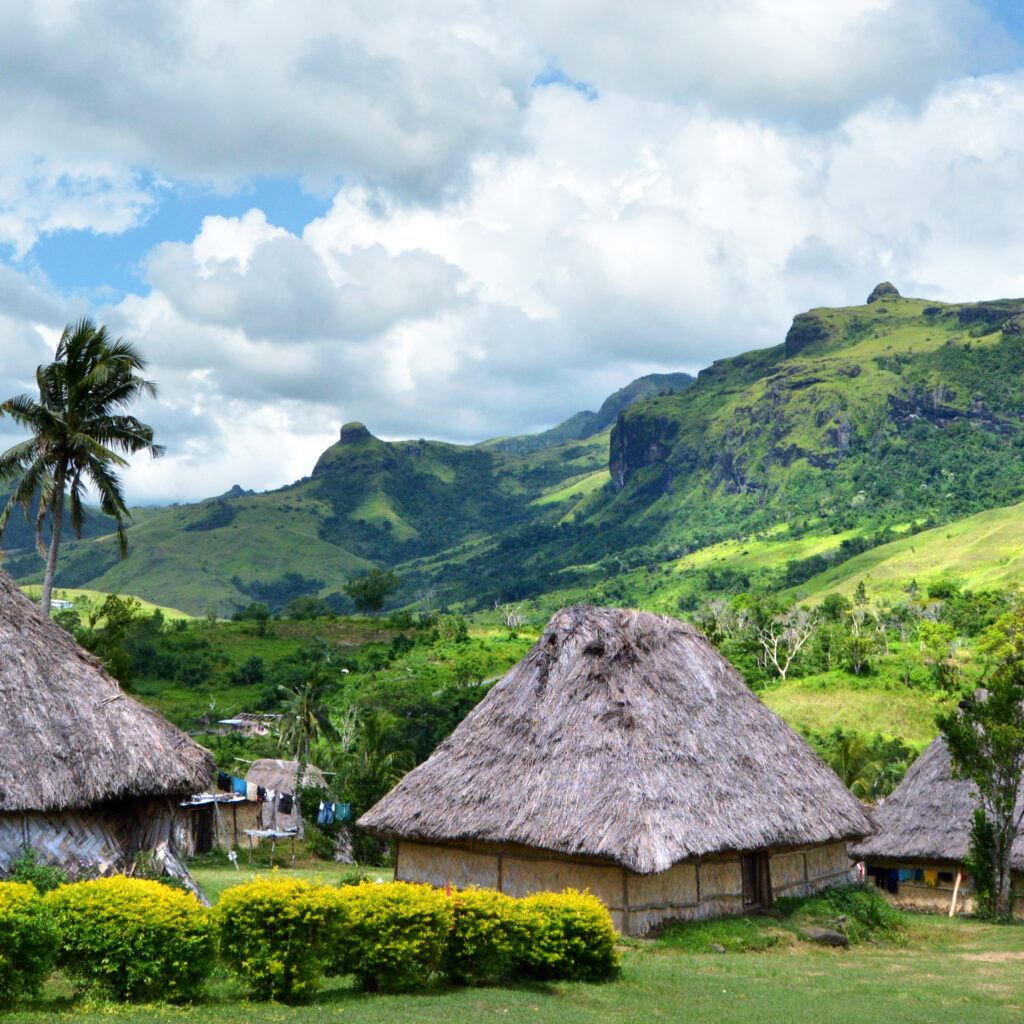
Climate change is reshaping ecosystems faster than most species can adapt. Rising temperatures are expanding the habitable range of species that were previously limited by cold — allowing invasive plants insects and pathogens to colonize new geographies while the native species those ecosystems evolved around struggle to compete in conditions that no longer match their biological requirements.
The result is accelerating ecological disruption: native species losing territory resource access and population viability to invasive competitors with broader thermal tolerances and fewer natural predators in their new habitats. A 2020 research paper studying bee species in Fiji documented this dynamic with unusual clarity — providing a case study that illustrates what ecological imbalance looks like at the species level and what it means for the ecosystems and agricultural systems that depend on those species.
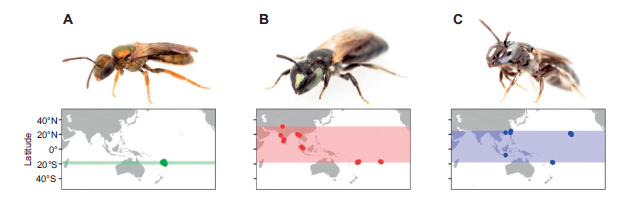
The Fiji study examined three bee species competing in the same habitat: Homalictus fijiensis — the native species — and two invasives: Braunsapis puangensis from India and Ceratina dentipes from Indonesia. The native species had established ecological relationships with local plants over thousands of years — the symbiosis between native pollinators and native plant species that drives reproduction nutrient cycling and habitat structure across the ecosystem.
The introduction of the two invasive species disrupted that balance directly. Braunsapis puangensis and Ceratina dentipes compete with Homalictus fijiensis for the same floral resources — reducing the food availability that sustains native bee populations. As native populations decline the plant species that depend on them for pollination lose their primary pollinator creating a cascading effect through the food web that affects every organism relying on those plants for food or habitat.
Ceratina dentipes adds a second layer of disruption: it pollinates invasive weed species that are themselves displacing native plants. The invasive bee accelerates the spread of invasive plants which further reduces the habitat and resources available to the native bee — a reinforcing cycle of ecological displacement that is extremely difficult to reverse once established.
The most alarming data point in the Fiji study is the latitudinal range comparison between species. Latitudinal range estimates how many degrees of latitude a species can inhabit — a proxy for its thermal tolerance and adaptability to temperature variation. Species with wide latitudinal ranges can survive and reproduce across a broad spectrum of temperatures. Species with narrow ranges are highly sensitive to temperature change.
Homalictus fijiensis — the native species — has a latitudinal range of only 4 degrees. Braunsapis puangensis spans 49 degrees. Ceratina dentipes spans 43 degrees. In a warming world where average temperatures are rising and seasonal extremes are intensifying the native species has almost no thermal buffer — while both invasives can adapt to conditions that would eliminate the local population entirely. This disparity makes climate change not just a background stressor but an active driver of native species displacement in favor of invasive competitors.
Ecology is the study of the relationships between organisms and their environment — the interconnected web of symbiosis parasitism competition and mutualism that determines which species thrive which decline and how ecosystems function as integrated systems rather than collections of independent organisms.
A stable ecosystem is not one where conflict does not exist — it is one where the checks and balances between species are in equilibrium. Predators regulate prey populations. Parasitism controls species that would otherwise dominate. Symbiosis between plants and pollinators between roots and mycorrhizal fungi between nitrogen-fixing bacteria and legumes drives the biological productivity that every species in the system depends on.
Invasive species disrupt this equilibrium not because they are inherently destructive but because they arrive without the natural enemies predators and parasites that regulate their populations in their native range. In a new ecosystem they face fewer biological constraints and outcompete native species that evolved within a balanced system of checks. The result is population collapse among native species and the loss of the ecological relationships — the symbioses and ecosystem services — that the native community depended on.
Ecosystem services are the direct and indirect benefits that functioning natural ecosystems provide to human society. They include pollination of crops by wild insects water filtration by wetlands and riparian buffers biological pest suppression by predatory insects and birds soil formation and nutrient cycling by decomposers and soil organisms and carbon sequestration by forests grasslands and wetland soils.
Agriculture depends on ecosystem services more directly than any other human economic activity. Pollination by wild and managed bees contributes to the yield of over 75 percent of the world's leading food crops. Biological pest suppression by native predatory insects reduces the chemical inputs required to manage pest pressure. Soil formation and nutrient cycling — driven by the same decomposer organisms that climate change and invasive species threaten — underpin every bushel of grain and every pound of livestock produced.
When invasive species displace the native organisms that perform ecosystem services the agricultural productivity those services support degrades quietly and persistently — often before the connection between ecological disruption and farm performance is recognized. The bee population collapse documented in Fiji is not an isolated ecological curiosity. It is a preview of what happens to pollination-dependent crops when the native species that provide that service are outcompeted by thermal-tolerant invasives in a warming climate.
A recently published paper describes the formation of translational ecology — a subfield designed to bridge the gap between ecological research and the decision-makers whose choices shape land use policy farm management and conservation practice. The core insight is that ecological science only improves outcomes when it reaches the people making decisions about land — farmers land managers regulators and policymakers — in forms they can act on.
Translational ecology approaches depend on building trusted iterative two-way relationships between scientists and natural resource managers from the beginning of the research program rather than presenting findings after the fact. As more decision-makers are informed of their impact on local ecosystems the management choices that shape farm landscapes — tillage rotation cover crops and input programs — can be made with fuller awareness of their ecological consequences.
For farmers this connection is direct. The ecological relationships that translational ecology works to protect — pollinator symbiosis soil food web function biological pest suppression — are the same relationships that determine the long-term productivity of farmland. Protecting them is not separate from farming well. It is part of it.

The ecological dynamics described above — invasive species displacement pollinator loss ecosystem service degradation — are not problems that individual farmers caused alone or can solve alone. But farm management decisions aggregate into landscape-level outcomes and the farms that manage for ecological health contribute to the broader ecosystem stability that their own productivity depends on.
Diverse crop rotations support a broader range of native insects pollinators and soil organisms than continuous monocultures. Field margins and cover crops provide habitat for native species that perform biological pest suppression and pollination services in adjacent crop fields. Reduced tillage and biological inputs preserve the soil food web that drives nutrient cycling and organic matter accumulation — the same biological systems that store carbon regulate water and build the long-term productivity of agricultural land.
Earnest Agriculture's Prairie Power Soybean works at the root level to support the soil biology that healthy ecosystems and productive farms share. Across 45 locations in 14 states in 2025 it delivered an average 7 percent yield lift at $10 per acre — a 3:1 return on investment (ROI) for farmers. Results vary by field; run the numbers on your acres.
Ecosystems are not background scenery. They are the biological infrastructure that agriculture — and every other human system — depends on. The symbiosis between pollinators and plants the parasitism that regulates pest populations the ecosystem services that filter water fix nitrogen and build soil are not separate from farm productivity. They are the foundation of it.
Climate change is accelerating the disruption of these systems by expanding the range of invasive species with broader thermal tolerances than the native organisms they displace. The farms and landscapes that protect ecological balance — through diverse rotations cover crops reduced chemical inputs and biological soil management — are the ones that will retain the ecosystem services that make productive farming possible over the long term.
Q: What is an ecosystem?
An ecosystem is a community of living organisms — plants animals fungi bacteria and other microorganisms — interacting with each other and with their physical environment as an integrated system. Ecosystems are defined by the relationships between their components: symbiosis parasitism competition and predation that together determine which species thrive and how energy and nutrients flow through the system.
Q: How do invasive species affect ecosystems?
Invasive species disrupt ecological balance by competing with native species for resources without the natural predators and parasites that regulate their populations in their native range. They displace native species reduce biodiversity and eliminate the ecological relationships — pollination nitrogen fixation biological pest suppression — that the native community depends on. Once established invasive species are extremely difficult to remove and their effects on ecosystem function can be permanent.
Q: What are ecosystem services?
Ecosystem services are the benefits that functioning natural ecosystems provide to human society — pollination of crops water filtration biological pest suppression soil formation nutrient cycling and carbon sequestration. Agriculture depends on ecosystem services more directly than any other economic activity. Pollination by wild insects contributes to the yield of over 75 percent of global food crops. Soil nutrient cycling by decomposers underpins every agricultural production system on Earth.
Q: What is symbiosis in ecology?
Symbiosis is a close long-term biological relationship between two different species. In ecology it encompasses mutualism (both benefit) commensalism (one benefits the other is unaffected) and parasitism (one benefits at the other's expense). The most agriculturally important symbiotic relationships are between legume roots and nitrogen-fixing bacteria and between plant roots and mycorrhizal fungi — partnerships that drive biological nitrogen fixation phosphorus uptake and soil aggregate formation.
Q: What is parasitism in ecology?
Parasitism is a biological relationship in which one organism (the parasite) benefits at the expense of another (the host). In ecology parasitism is a key regulatory mechanism — parasites and parasitoids control the population sizes of host species preventing any single species from dominating the ecosystem. In agriculture parasitoid wasps that target crop pest larvae are one of the most effective and cost-efficient biological pest control tools available when farming systems support their habitat and populations.