See what Prairie Power could do on your soybeans —
Grow EstimatorSee what Prairie Power could do on your soybeans —
Grow EstimatorStrong Roots Strong Harvest:
What Happens Below the Surface Shapes Everything Above It

Earnest Agriculture
March 3, 2025


A crop's yield potential is set early in the season — long before tasseling pollination or pod fill. It starts underground with roots pushing deeper into the soil profile in the first weeks after emergence.
Shallow roots stay near the surface where moisture disappears fast and nutrients wash away with the first heavy rain. That is money left in the field and yield left behind. Deep roots keep pulling in water and nutrients long after the surface dries — making better use of what is already in the ground and turning every acre into steadier returns.
Every farmer has seen it: two fields side by side same planting date same fertilizer same hybrid. One holds up better at harvest. The difference usually is not what was added — it is what the roots were able to reach.

Roots do not stop working once a plant emerges. They keep paying back all season long — pulling in water moving nutrients and staying in constant communication with the soil microbial community that supports plant health.
A deep branching root system accesses water and nutrients from a larger soil volume than a shallow compact one. During dry stretches when surface moisture is gone deep roots are still pulling from subsoil reserves — the difference between a crop that keeps growing and one that stalls.
Nutrient uptake efficiency follows the same logic. A root system that covers more of the soil profile intercepts more of the nitrogen phosphorus and potassium already present — reducing the total synthetic input required to hit yield goals.
Strong roots anchor the plant in place. That stability matters when wind picks up or heavy rain falls. Crops with shallow root systems go down first — and a lodged crop at harvest means yield loss mechanical difficulty and grain quality problems. Crops with deeper more developed root systems stay standing through the conditions that knock others over.
A wide branching root system holds soil together like a natural net — slowing erosion from wind and water and keeping topsoil where it belongs. Root biomass adds organic matter to the soil profile as roots die and decompose. Over multiple seasons crops with healthier root systems contribute to the long-term organic matter and biological activity that makes soil more productive year over year.

Roots do not build themselves in isolation. The soil microbial community — bacteria fungi and other organisms living in the rhizosphere — plays a direct role in root development nutrient access and stress tolerance.
Mycorrhizal fungi extend root reach by forming hyphal networks that access water and phosphorus in pore spaces too small for roots to enter directly. Plant growth-promoting bacteria produce hormones that stimulate root elongation and lateral root branching — physically increasing the root system's size and surface area. Nitrogen-fixing bacteria in symbiosis with soybean roots supply plant-available nitrogen that feeds the entire crop.
When soil biology is healthy these partnerships happen naturally. When soil biology is depleted — through tillage compaction continuous monoculture or heavy synthetic inputs — roots do not develop as effectively and the crop becomes more dependent on external inputs to compensate.
Years of intensive farming have thinned the microbial communities in many Corn Belt fields. Not every acre has the biology it once did — and not every root system gets the biological support it needs from germination forward.
Microbial seed treatments address this directly. By coating seeds with beneficial microorganisms before planting farmers give roots biological support from day one — before the crop even emerges. The microbes establish in the rhizosphere early supporting root development nutrient uptake and stress tolerance through the entire growing season.
Earnest Agriculture's Prairie Power Soybean is an AI-designed microbial biostimulant that works at the root level to improve the biology that drives soybean performance. Across 45 locations in 14 states in 2025 it delivered an average 7 percent yield lift at $10 per acre — a 3:1 return on investment (ROI) for farmers. Results vary by field; run the numbers on your acres.
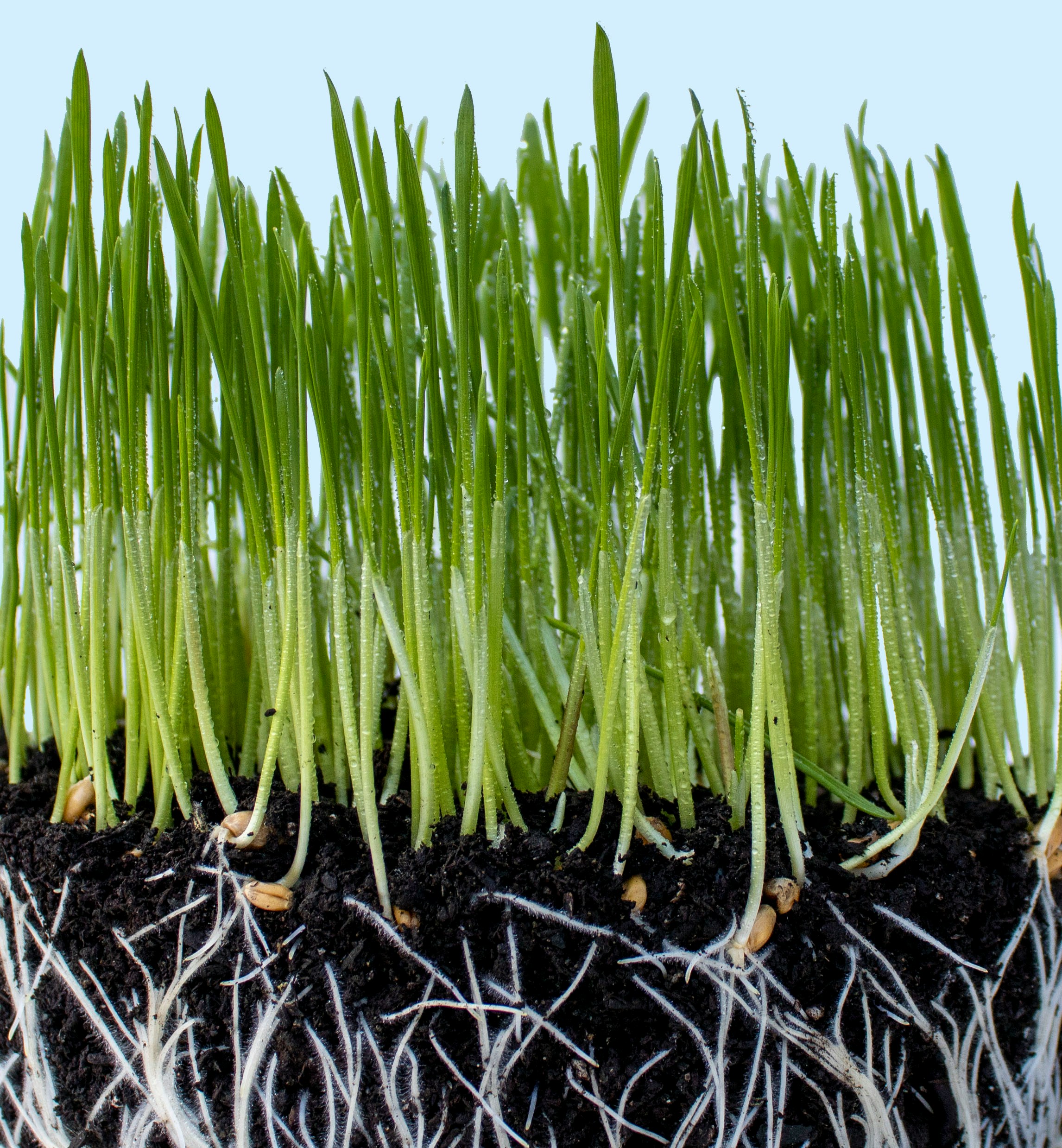
Roots may be out of sight but they decide more than most realize. They are why crops keep growing when rain shuts off why yields hold steady through hard markets and how fields pull through the toughest seasons.
The foundation under a crop shapes everything above it. When roots stay healthy — supported by strong soil biology and a microbial community that has what it needs — the rest follows. Stronger stalks fuller leaves and harvests that make the work worth it.
Q: Why do root systems matter for crop yield?
Root depth and root mass determine how much water and nutrients a crop can access across the growing season. Shallow roots lose access to moisture early in dry conditions. Deep roots keep pulling from subsoil reserves through stress periods. Crops with stronger root systems consistently outperform those with shallow or restricted roots at equivalent input levels.
Q: What causes shallow or weak root systems in row crops?
The main causes are soil compaction (which physically restricts root penetration) low soil organic matter (which reduces the biological activity that supports root development) depleted soil microbial communities and poor early-season establishment. Herbicide carryover and certain soil-borne diseases can also restrict root architecture.
Q: How do microbial seed treatments improve root development?
Microbial seed treatments introduce beneficial bacteria and fungi to the rhizosphere from germination forward. Plant growth-promoting bacteria produce hormones that stimulate root elongation and lateral branching. Mycorrhizal fungi extend root reach through hyphal networks. Together these organisms increase root surface area nutrient uptake efficiency and stress tolerance throughout the season.
Q: What is the rhizosphere?
The rhizosphere is the narrow zone of soil directly surrounding plant roots — typically 1 to 3 millimeters wide — where biological activity is highest. Roots release carbon compounds that feed soil microbes which in return make nutrients available suppress pathogens and stimulate root growth. The rhizosphere is the most important biological zone in the soil profile for crop performance.
Q: How does soil compaction affect root health?
Soil compaction physically restricts root penetration forcing roots to grow laterally near the surface rather than pushing deeper into the soil profile. Compacted soils also have reduced oxygen and water infiltration limiting the microbial activity that supports root function. Addressing compaction through subsoil tillage cover crops and reduced traffic is a prerequisite for rebuilding root health in affected fields.