See what Prairie Power could do on your soybeans —
Grow EstimatorSee what Prairie Power could do on your soybeans —
Grow EstimatorThe Nitrogen Cycle Explained:
What Every Farmer Needs to Know

Earnest Agriculture
March 3, 2025


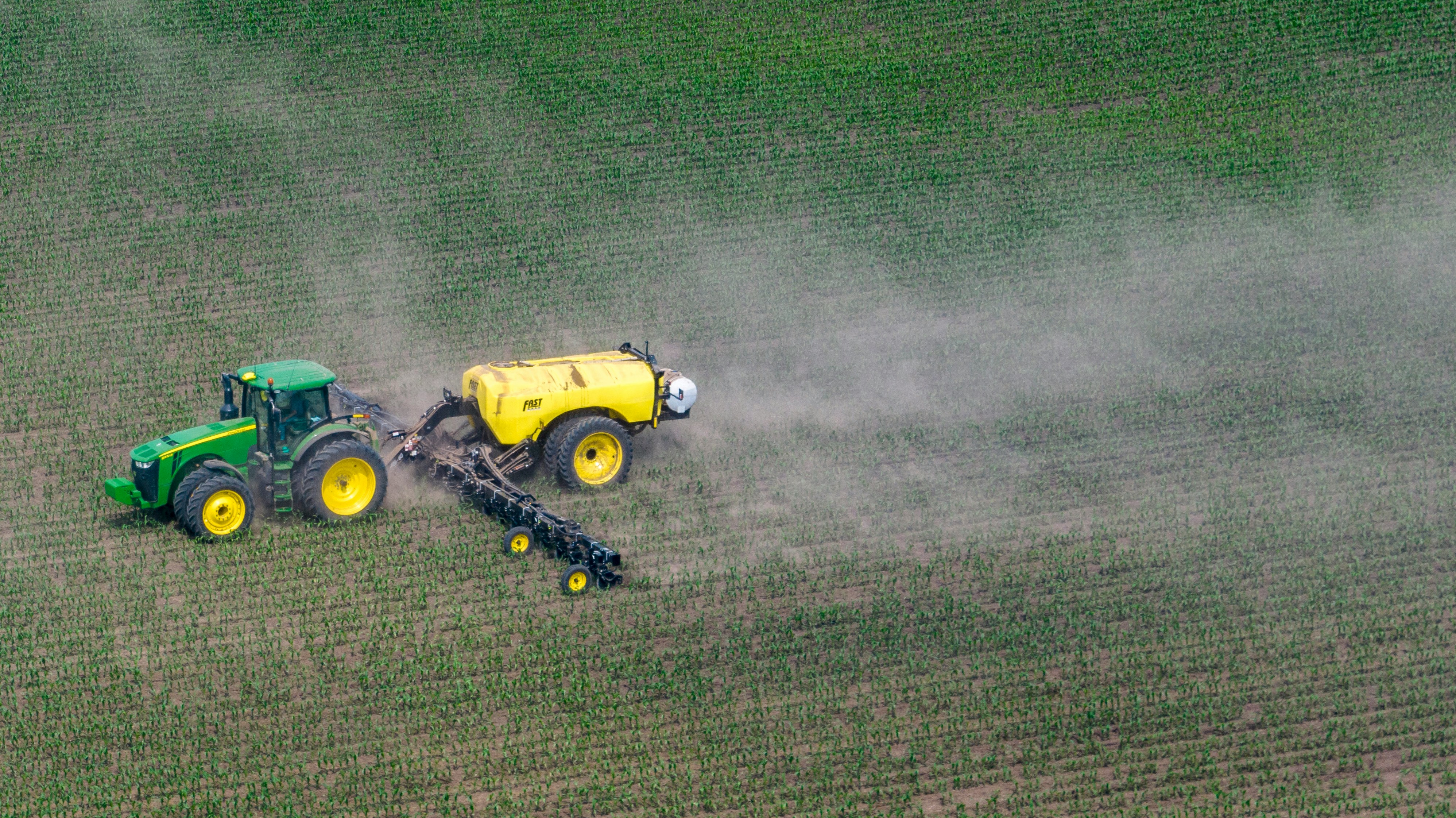
The nitrogen cycle is the process by which nitrogen moves through the atmosphere soil plants and back again in a continuous loop. Nitrogen makes up 78 percent of the atmosphere but atmospheric nitrogen gas is chemically inert and unavailable to plants in that form. The nitrogen cycle is the set of biological and chemical processes that convert it into forms plants can actually use and then return it to the atmosphere when organic matter decomposes.
For farmers the nitrogen cycle is not an abstract concept. It is the mechanism that determines how much nitrogen is available in the soil at any given point in the season how much of the nitrogen you apply actually reaches your crop and how much is lost to leaching denitrification or volatilization before the plant can absorb it.
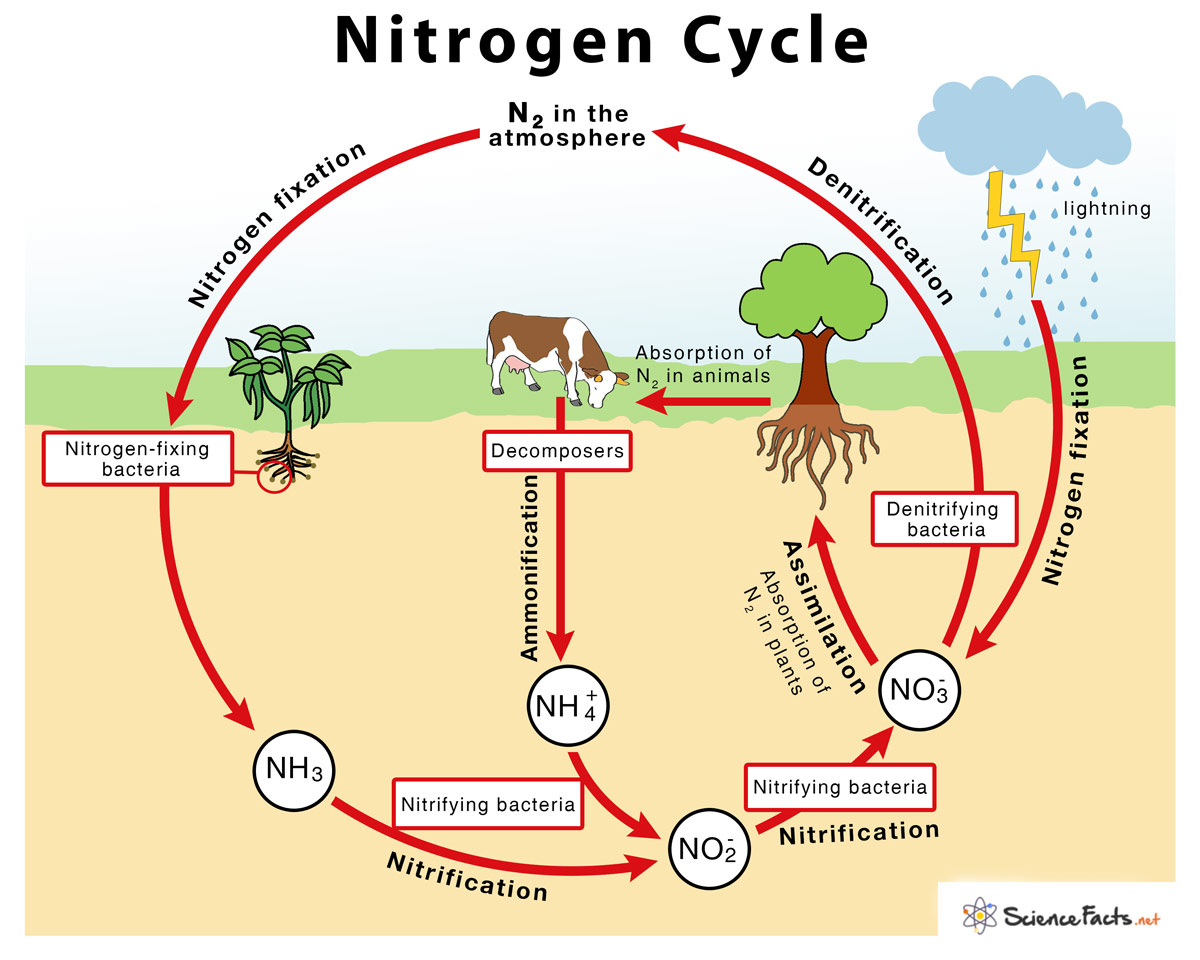
Nitrogen fixation is the conversion of atmospheric nitrogen gas into ammonia a form that plants and soil organisms can use. Biological fixation performed by bacteria is the more agronomically significant pathway and the one farmers can directly influence through management.
Nitrification is the two-step conversion of ammonia into nitrite and then into nitrate by specialized soil bacteria. Nitrate is the primary form of nitrogen that most crops take up through their roots. Nitrification requires aerobic conditions meaning it slows dramatically in compacted or waterlogged soils.
Assimilation is the uptake of nitrate and ammonium from the soil solution by plant roots and its incorporation into plant proteins amino acids and nucleic acids. The rate of assimilation depends on root development soil temperature and the health of the rhizosphere biology supporting root function.
Ammonification is the decomposition of organic nitrogen in plant residue animal manure and soil organic matter back into ammonia by bacteria and fungi. A biologically active soil with diverse decomposer populations mineralizes organic nitrogen faster and more consistently across the growing season.
Denitrification is the conversion of nitrate back into nitrogen gas by anaerobic bacteria under low-oxygen conditions returning nitrogen to the atmosphere where it is unavailable to plants. Tile drainage that improves soil aeration directly reduces denitrification losses.
Biological nitrogen fixation is the process by which Bradyrhizobium japonicum bacteria living in nodules on soybean roots convert atmospheric nitrogen into ammonia the plant can use. A well-nodulated soybean crop can fix 100 to 300 pounds of nitrogen per acre per season. Fields with adequate Bradyrhizobium populations and good nodulation fix nitrogen continuously from early vegetative stages through pod fill.
Three management factors consistently disrupt on-farm nitrogen cycling: tillage compaction and bare soil. Tillage physically destroys the fungal networks and bacterial habitats that drive ammonification and nitrification reducing soil microbial biomass by 30 to 50 percent. Compaction restricts the oxygen supply that nitrifying bacteria need. Bare soil between crops leaves no living root system to feed soil biology and no protection against nitrogen leaching.

Microbial seed inoculants deliver Bradyrhizobium japonicum directly to the soybean seed at planting ensuring adequate bacterial populations for maximum nitrogen fixation regardless of field history. Phosphorus-solubilizing bacteria improve phosphorus availability for root growth. Plant growth-promoting rhizobacteria stimulate root architecture increasing the surface area available for nodule formation and nutrient uptake.
Earnest Agriculture Prairie Power Soybean is an AI-designed microbial biostimulant built around the root biology that drives soybean nitrogen fixation and yield performance. Across 45 locations in 14 states in 2025 it delivered an average 7 percent yield lift at $10 per acre a 3:1 return on investment for farmers. Results vary by field; run the numbers on your acres.
Q: What is the nitrogen cycle in simple terms?
The nitrogen cycle is the process by which nitrogen moves from the atmosphere into soil and plants and back again. Bacteria convert atmospheric nitrogen gas into forms plants can use. Plants absorb it to grow. When plants and animals die decomposers break organic nitrogen back down and some returns to the atmosphere.
Q: What are the 5 steps of the nitrogen cycle?
The five steps are fixation nitrification assimilation ammonification and denitrification. Each step is driven by specific groups of soil bacteria and is affected by soil temperature aeration compaction and organic matter levels.
Q: What is biological nitrogen fixation and why does it matter for soybeans?
Biological nitrogen fixation is the conversion of atmospheric nitrogen gas into plant-available ammonia by bacteria living in root nodules. In soybeans Bradyrhizobium japonicum bacteria perform this process supplying 100 to 300 pounds of nitrogen per acre per season at no synthetic input cost.
Q: What disrupts the nitrogen cycle on farms?
The three main disruptors are tillage which destroys microbial habitat; compaction which restricts oxygen supply needed by nitrifying bacteria; and bare soil between crops which stops biological activity and allows nitrogen leaching.
Q: How do microbial inoculants improve nitrogen fixation in soybeans?
Microbial inoculants deliver Bradyrhizobium japonicum directly to the seed at planting ensuring adequate populations for nodule formation regardless of field history and supporting earlier and more extensive nodulation.