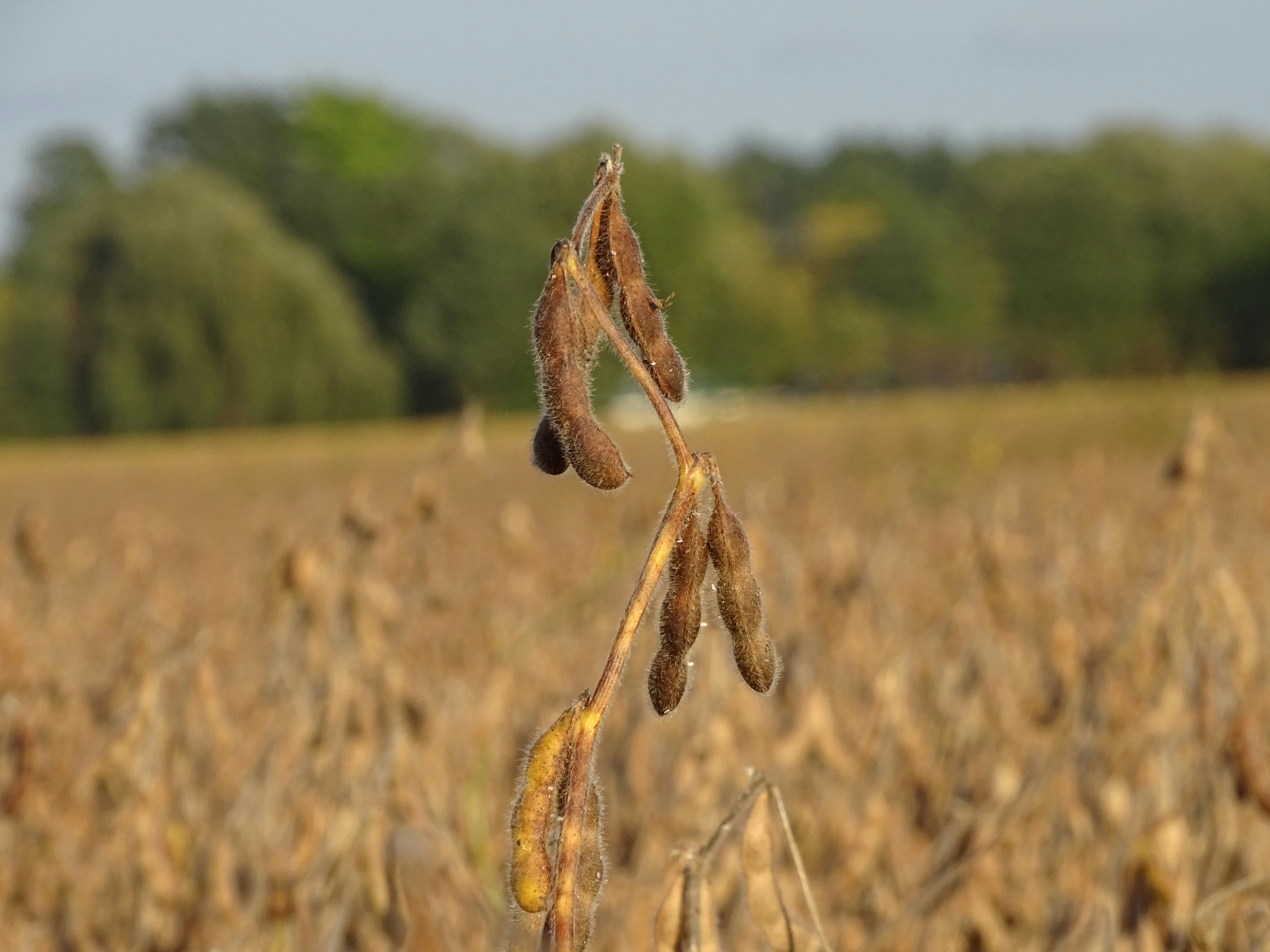
See what Prairie Power could do on your soybeans —
Grow EstimatorSee what Prairie Power could do on your soybeans —
Grow EstimatorWhat Are Organic Fertilizers?
Types Benefits and How to Apply Them

Earnest Agriculture
March 3, 2025


Organic fertilizers are nutrient inputs derived from natural sources — animal waste plant material and mineral deposits — that release nutrients slowly through biological decomposition rather than delivering them in immediately soluble chemical form. The distinction matters agronomically because of how the two approaches interact with soil biology.
Synthetic fertilizers deliver nutrients directly to the soil solution bypassing the microbial community entirely. Organic fertilizers work through that community — feeding the bacteria fungi and other decomposers that break down organic matter and release nutrients in plant-available forms. In doing so they improve humus soil over time building the organic matter content aggregate stability and biological activity that make land more productive year after year rather than more dependent on inputs to maintain yield.
The environmental advantage follows from the same mechanism. Organic fertilizers do not carry the concentrated soluble nitrogen and phosphorus loads that make synthetic fertilizers a primary driver of waterway contamination. Nutrients released through biological decomposition are taken up as they become available — reducing the leaching and runoff losses that characterize poorly timed synthetic applications.

Compost is organic material — food waste yard waste crop residue and leaves — that has been decomposed by microbial activity into a stable humus-rich amendment. It is the most broadly applicable organic fertilizer available: effective across all soil types suitable for all crops and directly additive to the soil properties that determine long-term productivity.
The nutrient content of compost is lower than synthetic fertilizers on a per-pound basis — typically 1 to 3 percent nitrogen 0.5 to 1 percent phosphorus and 1 to 2 percent potassium depending on source materials and composting process. What compost delivers that synthetic fertilizers cannot is organic matter — the carbon-based material that feeds soil biology builds water-holding capacity and creates the aggregate structure that defines humus soil. A single percentage point increase in soil organic matter allows the soil to hold approximately 20000 more gallons of water per acre.
Compost is particularly effective in sandy soils where it improves moisture and nutrient retention — addressing the two primary limitations of light-textured soils that make them difficult to manage with synthetic inputs alone.
Manure — from cattle hogs poultry or horses — is one of the oldest and most nutrient-dense organic fertilizers in agriculture. It is high in nitrogen phosphorus and potassium and contributes significant organic matter to the soil. Fields receiving consistent manure applications over multiple years consistently show higher organic matter greater biological activity and better water infiltration than comparable fields without manure history.
Manure is best suited for soils that are low in nitrogen and organic matter — particularly fields coming out of long-term continuous cropping without organic inputs. It should be applied with attention to two management considerations: salt content (which can be elevated in poultry manure and affect germination at high rates) and pathogen risk (which is managed through proper composting or incorporation timing well ahead of harvest).
Applied at agronomic rates — matched to crop nutrient removal rather than applied for disposal — manure is one of the most cost-effective fertility inputs available to integrated crop-livestock operations.
Bone meal is a slow-release organic fertilizer ground from animal bones — typically a byproduct of the meat processing industry. It is rich in phosphorus (typically 15 to 27 percent P₂O₅) making it the organic fertilizer of choice for soils and crops with high phosphorus demand. Phosphorus drives root development flower initiation and fruit and seed fill — making bone meal particularly valuable at transplanting and in perennial crop establishment.
Bone meal is best suited for clay and loam soils where phosphorus binds to soil particles and releases slowly over the growing season. It is not recommended for sandy soils where the solubilized phosphorus can leach below the root zone before plants have a chance to absorb it. Soil testing before application is the best way to confirm whether phosphorus is the limiting nutrient before investing in bone meal.
Worm castings — the excretions of earthworms as they process organic matter — are among the most biologically active organic inputs available. They are rich in plant-available nitrogen phosphorus potassium and micronutrients and dense with beneficial bacteria and fungi that seed the soil microbiome around roots and transplants.
As a worm castings fertilizer the material is most practical for high-value applications: transplant mixes seed starting media soil amendments for vegetable and specialty crop beds and top-dressing for established perennials. In broad-acre row crop systems the practical focus is on creating the conditions that support active earthworm populations — reduced tillage cover crops and organic matter additions — so castings are produced continuously throughout the soil profile rather than applied as a purchased input.
Fields with healthy earthworm populations are effectively producing worm castings fertilizer continuously at no cost — one of the clearest indicators of biological soil health and a direct outcome of the management practices that build humus soil over time.
Fish emulsion is a liquid organic fertilizer derived from fish waste — a byproduct of fish processing that is high in nitrogen and micronutrients. It is fast-acting relative to other organic fertilizers making it useful for in-season nitrogen supplementation and foliar feeding in high-value crop systems. It is particularly effective in sandy soils where its liquid form moves quickly into the root zone. The nitrogen content (typically 4 to 5 percent) is lower than synthetic sources but the micronutrient profile and microbial stimulation effect make it a useful complement to a broader fertility program.
Blood meal is a fast-release organic nitrogen source made from dried animal blood — typically 12 to 13 percent nitrogen by weight making it one of the highest-nitrogen organic fertilizers available. It is useful for rapid nitrogen correction in soils that are acutely nitrogen-deficient and in high-demand crops during peak growth periods. Blood meal should be applied conservatively — over-application acidifies soil and can burn plant tissue — and is most effectively used as a targeted supplement rather than a primary fertility input.

Seaweed and kelp meal are natural sources of micronutrients trace elements and plant hormones — particularly cytokinins and auxins that stimulate root growth cell division and stress tolerance. They are effective across all soil types and are used as a complement to primary nitrogen phosphorus and potassium sources rather than a standalone fertility input. Seaweed extracts applied as foliar sprays or soil drenches improve germination establishment and stress recovery in ways that macronutrient inputs alone do not.
The effectiveness of any organic fertilizer depends as much on application timing rate and method as on the product itself. Getting the most out of organic inputs requires understanding how biological decomposition works and aligning applications with the conditions that support it.
Apply organic fertilizers in spring or fall when soil moisture is adequate to support microbial activity. Fall applications of compost and manure allow organic matter to begin decomposing over winter — releasing nutrients into the soil profile ahead of spring planting. Spring applications should be timed early enough to allow decomposition before peak crop nutrient demand. Avoid applying to frozen or saturated ground where runoff risk is high.
Apply organic fertilizers at agronomic rates matched to soil test results and crop nutrient removal. Over-application — particularly of high-nitrogen sources like blood meal poultry manure and fish emulsion — creates nutrient imbalances that can reduce plant growth rather than improve it. Calibrated spreaders and injectors ensure even distribution across the field preventing the hot spots and deficient zones that result from inconsistent application.
Incorporating organic fertilizers — particularly manure and compost — into the soil surface reduces volatilization of ammonia nitrogen and improves contact between organic material and the soil microbial community responsible for decomposition. In no-till systems surface application with cover crop residue as a buffer is the practical alternative to incorporation — slowing evaporation and supporting the biological breakdown process at the soil surface.
Organic fertility programs should be guided by soil testing. A baseline soil test identifies which nutrients are limiting and allows rates to be calibrated to actual crop need rather than general recommendations. Annual or biennial testing tracks organic matter trends over time — the most direct indicator of whether an organic fertility program is building the humus soil it is designed to create.

Organic fertilizers and microbial inoculants are complementary — not competing — inputs. Organic fertilizers supply the carbon and nutrient substrate that feeds soil microbial communities. Microbial inoculants supply the specific organisms that convert that organic matter into plant-available nutrients most efficiently.
A field receiving consistent compost or manure applications but with a depleted microbial community will not mineralize organic matter as efficiently as a field with both organic matter inputs and an active diverse microbiology. Microbial inoculants applied at planting accelerate nutrient cycling in organic systems and improve the return on every dollar invested in compost manure and other organic inputs.
Earnest Agriculture's Prairie Power Soybean is an AI-designed microbial biostimulant that supports the rhizosphere biology driving soybean performance. Across 45 locations in 14 states in 2025 it delivered an average 7 percent yield lift at $10 per acre — a 3:1 return on investment (ROI) for farmers. Results vary by field; run the numbers on your acres.
Organic fertilizers work differently than synthetic inputs — and that difference is the point. By feeding the soil biological community rather than bypassing it they build humus soil improve water-holding capacity and create the long-term fertility that synthetic programs cannot replicate. Compost manure bone meal worm castings fish emulsion blood meal and seaweed each have specific best-fit applications. Used at the right rates timed correctly and supported by an active soil microbiology they deliver productivity gains that compound over seasons rather than requiring increasing inputs to maintain.
Q: What are organic fertilizers?
Organic fertilizers are nutrient inputs derived from natural plant and animal sources that release nutrients slowly through biological decomposition. Unlike synthetic fertilizers they feed the soil microbial community that makes nutrients available to crops — building humus soil and long-term fertility rather than bypassing soil biology with soluble chemical nutrients.
Q: What are the best organic fertilizers for row crop farming?
Compost and manure are the most practical organic fertilizers for broad-acre row crop systems — providing organic matter nitrogen phosphorus and potassium at manageable application rates. Bone meal addresses phosphorus-deficient soils. Worm castings fertilizer is most practical for high-value specialty applications. Soil testing should guide selection and rate for any fertility program.
Q: What is humus soil and how do organic fertilizers build it?
Humus soil is soil with high organic matter content — the stable carbon-rich material produced when bacteria fungi and other decomposers break down plant and animal material over time. Organic fertilizers feed the biological processes that produce humus — increasing water-holding capacity aggregate stability and nutrient cycling capacity. Every ton of compost or manure applied moves soil one step closer to the humus-rich profile that supports top-end productivity.
Q: Are worm castings effective as a fertilizer?
Yes. Worm castings are rich in plant-available nutrients and dense with beneficial soil microbes that seed the rhizosphere and support root development. As a direct input they are most cost-effective for transplants seed starting and high-value specialty crops. In broad-acre systems the practical approach is building earthworm populations through reduced tillage cover crops and organic matter — creating continuous worm castings production throughout the soil profile.
Q: How do I apply organic fertilizers correctly?
Apply organic fertilizers at agronomic rates guided by soil testing in spring or fall when soil moisture supports microbial decomposition. Distribute evenly to prevent nutrient hot spots. Incorporate where possible to reduce nitrogen volatilization and improve microbial contact. Track organic matter trends with annual soil testing to confirm the program is building the soil health it is designed to create.