See what Prairie Power could do on your soybeans —
Grow EstimatorSee what Prairie Power could do on your soybeans —
Grow EstimatorWhat Is Agriculture?
A Complete Overview of Farming Past Present and Future

Earnest Agriculture
March 3, 2025


Agriculture is the practice of cultivating plants and raising livestock to produce food fiber fuel and other essential goods. It is one of the oldest and most fundamental human activities — practiced in every country across the world and responsible for virtually everything people eat wear and use on a daily basis.
The term encompasses a wide range of farming practices: grain production livestock rearing fruit and vegetable farming dairy production fiber crops like cotton and wool and increasingly the production of biological inputs and renewable energy from agricultural land. Agriculture is both the industry that feeds the world and the land management system that shapes the health of soils water systems and ecosystems across more than 50 percent of the Earth's habitable land surface.
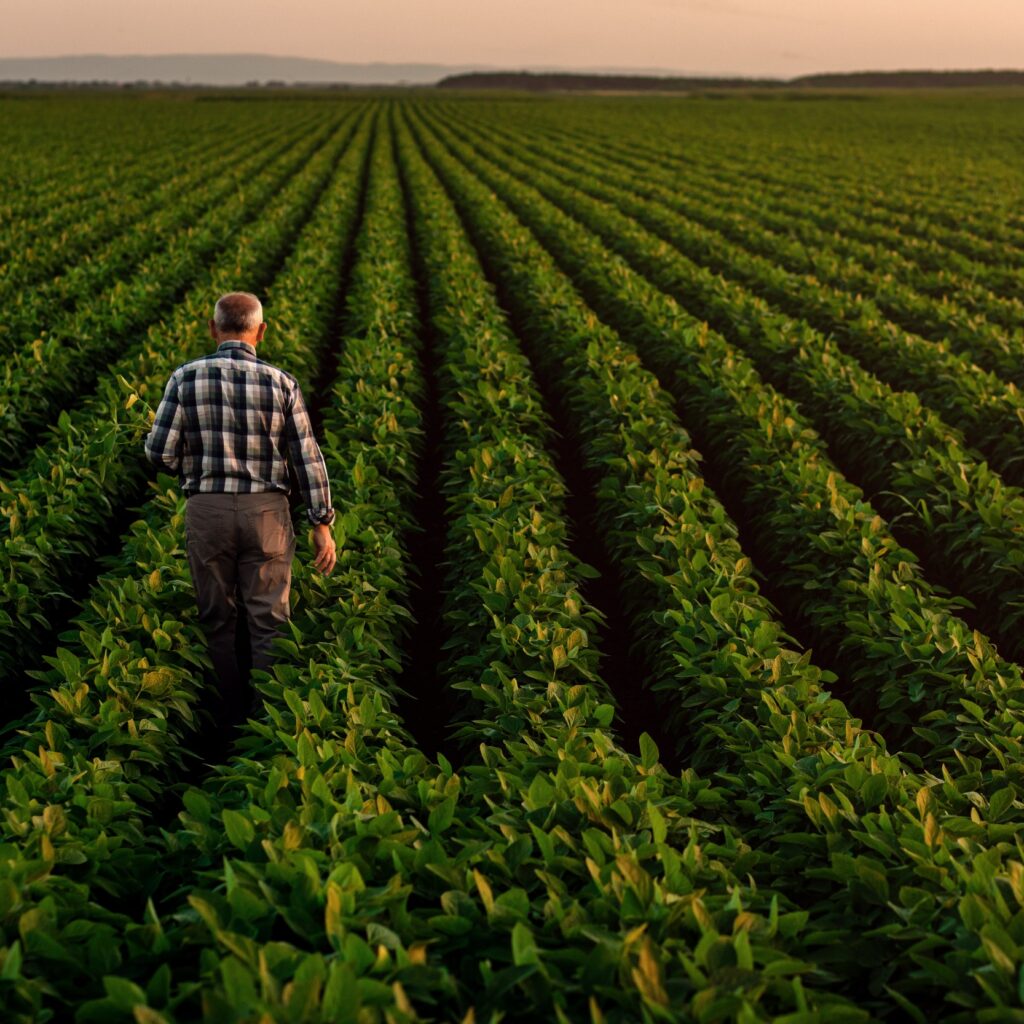
Traditionally most people were involved in farming to some extent — because agriculture was the primary means of obtaining the food and materials required for survival. As societies developed and urbanized employment options expanded and farming transitioned from a personal necessity to a specialized profession. Today a small percentage of the population in developed countries produces food for everyone else — a concentration of agricultural expertise and infrastructure that would have been unrecognizable to farming communities even a century ago.
Modern agricultural operations depend on a broad ecosystem of supporting professions beyond the farmer. Agronomists advise on crop management soil health and input programs. Veterinarians manage herd health and disease prevention in livestock operations. Equipment technicians maintain the machinery that makes large-scale production possible. Seed and input company representatives develop and deliver the genetics and products that drive yield. And an expanding sector of agricultural technology professionals develops the data systems sensors and biological tools that are reshaping how farms are managed.
Smaller-scale operations — smallholdings market gardens and community-supported agriculture farms — represent a growing segment of the agricultural landscape as consumer demand for locally produced and transparently grown food increases. These operations often adopt sustainable farming practices and direct-to-consumer models that large commodity producers are beginning to follow at scale.
Agriculture is practiced year-round across every continent on Earth — from the Corn Belt of the American Midwest to the rice paddies of Southeast Asia to the wheat steppes of Central Asia to the smallholder farms of sub-Saharan Africa. It is not limited by geography or climate — only by the specific crops and livestock suited to local conditions and the management systems developed to work within them.
In modern agricultural systems farming has become more geographically concentrated as improved transportation infrastructure allows goods produced in optimal growing regions to be distributed globally. Grain produced in Iowa is consumed in dozens of countries. Fruit grown in Chile fills grocery stores in January across North America and Europe. The globalization of food supply chains has increased production efficiency but also increased the distance between agricultural production and the communities that depend on it — a tension that is driving renewed interest in regional food systems and locally adapted crop varieties.
Agriculture is the foundation of human civilization. Every calorie consumed by the approximately eight billion people on Earth traces back to an agricultural system somewhere in the world. Beyond food production agriculture provides the raw materials for clothing (cotton wool flax) construction (timber bamboo) fuel (ethanol biodiesel) pharmaceuticals (plant-derived compounds) and the biological inputs — microbial inoculants organic amendments and cover crop seed — that are improving the sustainability of production systems globally.
The ecological services that well-managed agricultural land provides extend beyond food. Healthy farmland sequesters carbon in soil organic matter. Diverse crop rotations and cover crops support pollinator populations and beneficial insect habitat. Well-managed pastures and perennial crops maintain water infiltration and reduce runoff that would otherwise carry nutrients and sediment into waterways. Agriculture managed for ecosystem health is not just productive — it is a net contributor to the natural systems that make the surrounding landscape more resilient.
.jpg)
The history of agriculture is the history of human civilization. Early farming systems were subsistence-based: families and communities grew what they needed managed animals for labor and food and traded surplus locally. The introduction of draft animals irrigation and crop rotation allowed surpluses to grow and populations to expand beyond what subsistence farming could support.
The Green Revolution of the mid-twentieth century — driven by synthetic fertilizers pesticides and high-yielding crop varieties — dramatically increased global food production and averted the famines that many predicted would accompany rapid population growth. It also created the input-intensive monoculture systems that now dominate global commodity production — systems that produce at scale but carry long-term costs to soil health water quality and biological diversity that are increasingly difficult to ignore.
The current transition in agriculture is toward systems that combine the productivity of modern science with the ecological intelligence of traditional farming — regenerative agriculture precision agriculture and biological inputs that improve efficiency while rebuilding the soil health and ecosystem function that intensive production has depleted.
Sustainable farming practices are agricultural methods that maintain or improve long-term land productivity while reducing environmental impact. They are not a single approach but a toolkit of complementary practices that together build the resilience that intensive systems have traded away for short-term yield.
Crop rotation is among the most foundational. By alternating crops on the same ground from season to season farmers break pest and disease cycles improve soil fertility through diverse root architectures and legume nitrogen fixation and reduce the input dependency that continuous monoculture creates. A well-designed rotation is simultaneously a pest management tool a fertility program and a biological diversity investment.
Cover cropping keeps living roots in the soil between cash crops — feeding the microbial community that drives nutrient cycling building organic matter and protecting the soil surface from the erosion and compaction that bare ground is vulnerable to. Reduced tillage preserves the fungal networks and aggregate structure that tillage destroys. Together these practices rebuild the humus-rich biologically active soil profile that makes farmland productive over the long term.
Precision agriculture applies data technology and site-specific management to reduce input waste and improve crop performance at the field level. GPS-guided equipment soil sensors aerial imagery and farm data platforms like Climate FieldView allow farmers to manage variability within fields — applying inputs where they are needed at the rates the soil and crop actually require rather than uniformly across every acre.
The integration of precision agriculture technology with biological inputs represents the frontier of modern farm management. Yield maps identify where fields consistently underperform. Soil sensors reveal the organic matter and moisture patterns that explain that underperformance. Microbial inoculants and biological seed treatments address the biological root causes — depleted rhizosphere communities low nitrogen fixation restricted root development — that data alone cannot fix.
Regenerative agriculture goes beyond sustainability — its goal is not just to maintain current productivity levels but to actively restore the soil health biodiversity and ecological function that intensive farming has degraded. It builds on sustainable farming practices and adds a biological and ecological framework: rebuilding soil organic matter supporting the soil food web reducing synthetic input dependency and improving the water and carbon cycles that healthy farmland regulates.
The farms implementing regenerative principles are seeing measurable results: higher organic matter greater aggregate stability more diverse and active soil microbial communities and yield stability through weather extremes that input-dependent systems cannot match. The transition requires patience — biological recovery takes multiple seasons — but the long-term trajectory is toward lower costs greater resilience and farmland that becomes more productive over time rather than more dependent on external inputs to maintain yield.
Earnest Agriculture's Prairie Power Soybean supports this transition directly — an AI-designed microbial biostimulant that works at the root level to rebuild the rhizosphere biology that regenerative systems depend on. Across 45 locations in 14 states in 2025 it delivered an average 7 percent yield lift at $10 per acre — a 3:1 return on investment (ROI) for farmers. Results vary by field; run the numbers on your acres.
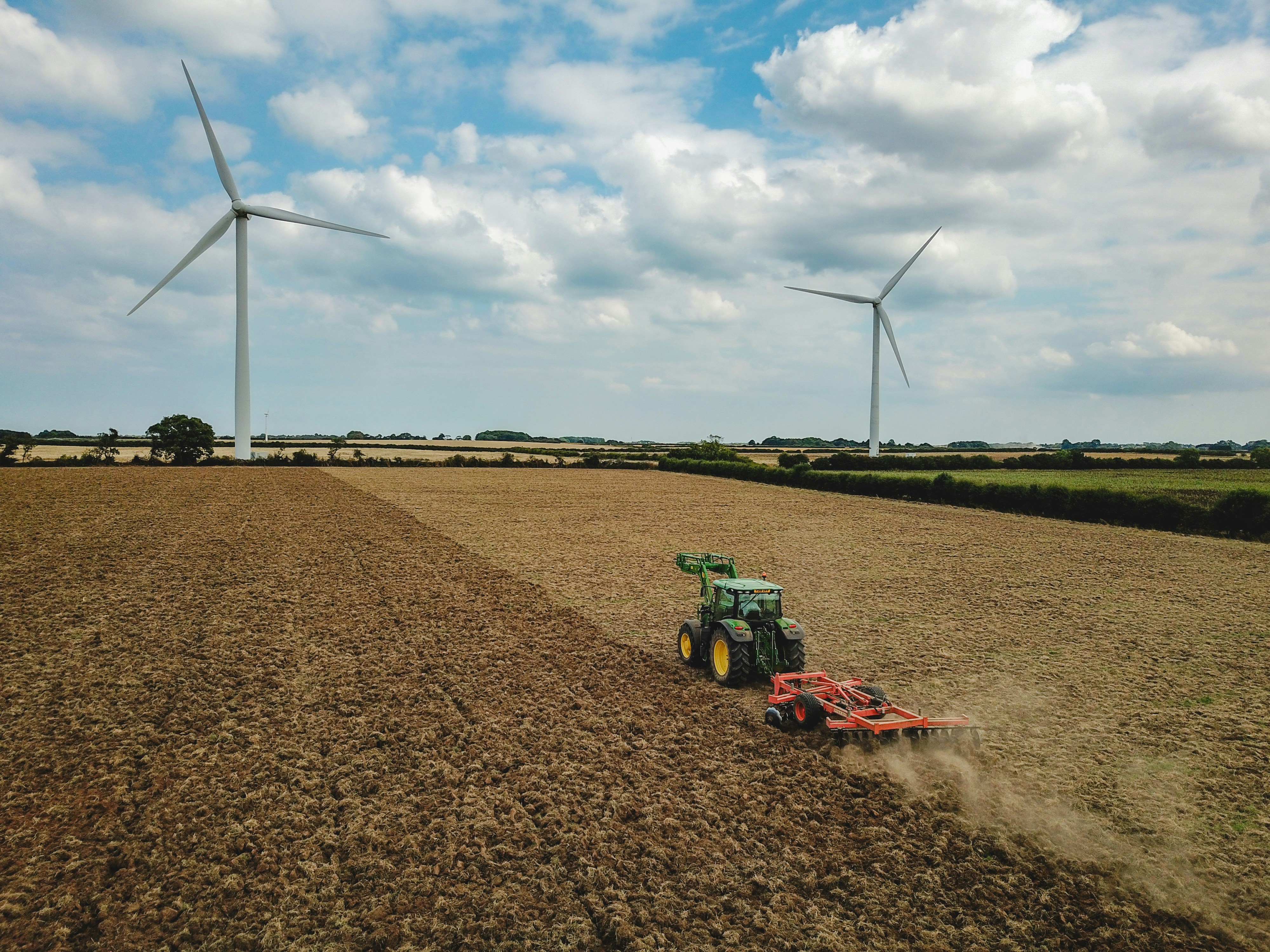
Agriculture is not just an industry. It is the biological and ecological system that human civilization is built on. Its health — the health of its soils its ecosystems its farming communities and its long-term productive capacity — determines the health of everything that depends on it. The transition from input-intensive monoculture toward regenerative precision and biologically informed farming is not a departure from productivity. It is the path toward the kind of productivity that lasts.
Q: What is agriculture?
Agriculture is the practice of cultivating plants and raising livestock to produce food fiber fuel and other essential goods. It encompasses grain production livestock rearing fruit and vegetable farming dairy fiber crops and biological input production. It is practiced in every country on Earth and is the foundation of human civilization and the global food supply.
Q: What is regenerative agriculture?
Regenerative agriculture is a farming approach focused on restoring soil health biodiversity and ecological function rather than simply sustaining current productivity. It uses crop rotation cover crops reduced tillage biological inputs and precision management to rebuild soil organic matter support soil biology reduce synthetic input dependency and improve the water and carbon cycles that healthy farmland regulates.
Q: What are sustainable farming practices?
Sustainable farming practices are agricultural methods that maintain or improve long-term land productivity while reducing environmental impact. Key practices include crop rotation cover cropping reduced tillage biological pest management microbial inoculants and precision input management. Together they build farm resilience and soil health rather than depleting the natural capital that production depends on.
Q: What is precision agriculture?
Precision agriculture uses GPS soil sensors aerial imagery and data platforms to manage variability within farm fields — applying inputs where they are needed at the rates the soil and crop actually require. It reduces input waste improves crop performance and when integrated with biological inputs addresses both the data and the biological root causes of field underperformance.
Q: Why is crop rotation important in modern agriculture?
Crop rotation breaks pest and disease cycles that build up under continuous monoculture improves soil fertility through diverse root architectures and legume nitrogen fixation reduces herbicide-resistant weed pressure and supports a more diverse soil microbial community. It is one of the highest-return sustainable farming practices available — delivering pest management fertility and biological benefits without adding new inputs.