See what Prairie Power could do on your soybeans —
Grow EstimatorSee what Prairie Power could do on your soybeans —
Grow EstimatorWhat Is Fulvic Acid and
Does It Actually Help Crops

Earnest Agriculture
March 3, 2025


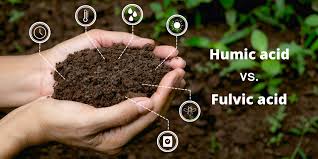
Fulvic acid is the smallest most soluble and most biologically active fraction of humus. Humus is the stable organic matter that forms in soil through the long-term decomposition of plant and animal material and it is typically divided into three fractions based on molecular size and solubility: humin the largest insoluble fraction; humic acid medium-sized soluble in alkaline conditions; and fulvic acid the smallest soluble in all pH conditions.
The small molecular size of fulvic acid is what makes it functionally distinct. Because its molecules are smaller than those of humic acid fulvic acid can pass through plant cell membranes enter plant tissue directly and carry nutrients with it into the plant.
Fulvic acid forms through the decomposition pathway as soil microbes break down plant residue animal material and organic matter into progressively smaller and more chemically complex compounds. Bacteria and fungi break these materials down into the stable humic substances including fulvic acid that define mature humus. The rate of fulvic acid formation depends directly on soil biological activity: a diverse and abundant microbial community produces fulvic acid continuously while a biologically depleted soil produces it slowly regardless of how much organic matter is applied.
Chelation is the process by which an organic molecule bonds to a mineral nutrient ion and holds it in solution preventing it from binding to soil particles and becoming unavailable. Fulvic acid is one of the most effective natural chelating agents in soil. It chelates iron zinc manganese copper and other micronutrients keeping them in plant-available forms even in high pH soils where these nutrients would otherwise become inaccessible to roots.
Fulvic acid increases the permeability of plant cell membranes improving the efficiency of nutrient uptake across the root surface. Research shows that fulvic acid application increases the rate at which roots absorb nitrate phosphate potassium and micronutrients from the soil solution.
Fulvic acid stimulates root development including root length branching and root hair density. More extensive root architecture means greater soil volume explored greater surface area for nutrient and water uptake and more contact with the soil microbial community that supports plant performance.

Fulvic acid levels in soil reflect the activity of the decomposition biology that produces it. High levels indicate a biologically active soil with a functioning microbial community. Low levels indicate biological depletion from tillage compaction high synthetic input rates or organic matter deficit. Improving fulvic acid levels means feeding and protecting the biology that produces it through organic matter additions reduced tillage and biological inputs.
Humus is the umbrella term for the stable organic matter fraction of soil. Humic acid is the medium-sized fraction that works primarily to improve soil structure and cation exchange capacity. Fulvic acid is the smallest most soluble most biologically active fraction that acts fastest and is most important for in-season nutrient availability and plant growth stimulation. The three fractions work together in healthy soil: humus builds long-term fertility humic acid improves structure and fulvic acid makes nutrients immediately available.
The most durable path to high fulvic acid levels healthy humus soil and the nutrient availability they provide is building and sustaining the soil biology that produces them. Organic matter additions feed the decomposition pathway. Reduced tillage protects the fungal networks and bacterial communities that drive it.
Earnest Agriculture Prairie Power Soybean supports the rhizosphere biology that drives organic matter decomposition nutrient cycling and the biological processes that produce fulvic acid and build humus soil over time. Across 45 locations in 14 states in 2025 it delivered an average 7 percent yield lift at $10 per acre a 3:1 return on investment for farmers. Results vary by field; run the numbers on your acres.
Q: What is fulvic acid in simple terms?
Fulvic acid is the smallest and most soluble fraction of humus the stable organic matter in soil. It forms through microbial decomposition of plant and animal material. Its small molecular size allows it to enter plant cells directly carrying nutrients with it.
Q: What are the main fulvic acid benefits for plants?
The main fulvic acid benefits for plants are nutrient chelation keeping micronutrients like iron and zinc in plant-available forms; improved membrane permeability increasing nutrient absorption through root cells; and root stimulation including increased root length branching and root hair density.
Q: What is the difference between fulvic acid and humic acid?
Fulvic acid is the smallest most soluble fraction of humus active at all pH levels and capable of entering plant cells directly. Humic acid is larger and works primarily to improve soil structure and cation exchange capacity. Fulvic acid acts faster and more directly on plant nutrition.
Q: How do I improve fulvic acid levels in my soil?
Improving fulvic acid levels means building the biology that produces it: add organic matter through compost manure and cover crops reduce tillage to protect microbial communities and support a diverse soil microbiome through biological inputs.
Q: What is humus soil and how does it relate to fulvic acid?
Humus soil is topsoil with high organic matter content characterized by dark color high water-holding capacity and biological activity. Fulvic acid is the most mobile and plant-available component of the organic matter complex. Building humus soil and building fulvic acid levels are the same goal achieved through the same practices.