See what Prairie Power could do on your soybeans —
Grow EstimatorSee what Prairie Power could do on your soybeans —
Grow EstimatorWhat Is Mycelium and
What Does It Do for Your Soil

Earnest Agriculture
March 3, 2025


Mycelium is the vegetative body of a fungus made up of a network of fine thread-like filaments called hyphae. While mushrooms are the fruiting body of fungi that most people recognize mycelium is the living structure that does the functional work: exploring soil absorbing nutrients forming partnerships with plant roots and building the physical matrix that holds soil aggregates together.
In healthy agricultural soil mycelium is everywhere. A single teaspoon of undisturbed soil can contain several miles of fungal hyphae from dozens of species. This network is invisible to the naked eye but it is one of the most biologically active and agronomically important components of a productive soil system.
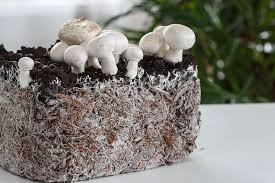
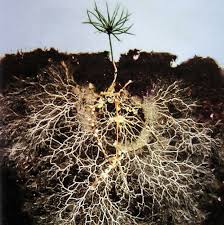
The mycelium network extends the effective foraging range of plant roots dramatically. Plant roots can directly access nutrients and water within a few millimeters of the root surface. Fungal hyphae from mycorrhizal partnerships extend that reach by 10 to 100 times exploring a much larger volume of soil and transporting what they find back to the root.
The mycelium network moves water during drought stress when soil pores are too dry for root uptake. It transports phosphorus which is immobile in soil and does not move to roots by diffusion fast enough to meet crop demand. It also moves zinc copper and other micronutrients that are present in soil but not in plant-available positions near the root surface.
Arbuscular mycorrhizal fungi are the most widespread and agronomically important group of soil fungi. They form symbiotic relationships with over 80 percent of terrestrial plant species including most row crops. In a functioning partnership the plant supplies carbon to the fungus and the fungus supplies phosphorus water and micronutrients to the plant. Research documents arbuscular mycorrhizal fungi supplying 40 to 80 percent of plant phosphorus uptake in soils with low to moderate phosphorus availability.
One of the most important but least recognized contributions of the mycelium network is the production of glomalin a sticky glycoprotein secreted by arbuscular mycorrhizal fungi that binds soil particles together into stable aggregates. Glomalin accounts for 15 to 20 percent of total soil carbon in healthy agricultural soils and persists for 7 to 42 years before degrading. Fields managed with reduced tillage and biological inputs accumulate glomalin and build humus soil over time.
Tillage physically severs fungal hyphae breaking the network that took an entire growing season to build. A single deep tillage pass can reduce fungal biomass by 50 percent or more. Rebuilding a functional mycelium network after aggressive tillage can take multiple seasons of undisturbed soil management.
Reducing tillage is the single most impactful practice for protecting the mycelium network. No-till and strip-till systems allow fungal hyphae to persist across seasons building network complexity and density over time. Biological fungal inputs deliver arbuscular mycorrhizal fungi spores directly to the seed at planting establishing colonization from the earliest stages of root development.
Earnest Agriculture Prairie Power Soybean supports the rhizosphere biology that sustains and feeds the mycelium network at the root level. Across 45 locations in 14 states in 2025 it delivered an average 7 percent yield lift at $10 per acre a 3:1 return on investment for farmers. Results vary by field; run the numbers on your acres.
Q: What is mycelium in soil?
Mycelium is the vegetative body of soil fungi made up of a network of thread-like filaments called hyphae. It lives throughout the soil profile exploring for nutrients and water forming partnerships with plant roots and producing the glomalin compounds that build soil aggregates.
Q: What is the mycelium network and what does it do for crops?
The mycelium network is the underground web of fungal hyphae that extends far beyond the reach of plant roots transporting water phosphorus and micronutrients back to the root in exchange for carbon. It can extend the effective nutrient foraging range of plant roots by 10 to 100 times.
Q: What are arbuscular mycorrhizal fungi and why do they matter?
Arbuscular mycorrhizal fungi are soil fungi that form symbiotic partnerships with the roots of over 80 percent of plant species including most row crops. They supply phosphorus water and micronutrients to the plant in exchange for carbon and can supply 40 to 80 percent of plant phosphorus uptake under low to moderate soil phosphorus conditions.
Q: How does mycelium build humus soil?
Mycelium builds humus soil primarily through glomalin a sticky glycoprotein secreted by arbuscular mycorrhizal fungi that binds soil particles into stable aggregates. Glomalin accounts for 15 to 20 percent of total soil carbon in healthy soils and persists for 7 to 42 years.
Q: Why is tillage bad for mycelium?
Tillage physically severs fungal hyphae breaking the network that took an entire season to build. A single deep tillage pass can reduce fungal biomass by 50 percent or more and rebuilding a functional network after aggressive tillage takes multiple seasons.